Physical vs. Digital: My Real-World Strategy for Launching an AI Side Hustle from Scratch
Painless AI Lab – A Hong Kong Practitioner’s Real-World AI Journey (Part 14)
In my last post, I shared the story of turning down a friend’s offer to manage his investment capital. Saying it out loud crystallized something important: stock market gains are nice, but a stable business that generates real cash flow is what actually pays the bills: especially in a place like Hong Kong, where rent doesn’t care if the market is down.
That conversation naturally led to the question I get asked all the time: “Chris, if I want to start a side business today, how do I actually use AI without falling for the scams?”
You know the ones. Scroll YouTube or social media in a minute and you’ll see videos promising the world: “I made $10,000 last week with AI Drop Shipping,” “Build a Print-on-Demand empire with ChatGPT,” or “Print money creating AI eBooks.”
Let’s be straight with each other, it is possible to build real income with AI, but it’s not simple, easy or automatic. The hype is loud, but underneath it there’s a genuine shift happening.
After wrestling with this myself, I’ve broken the practical opportunities into two main buckets: Digital Products and Physical Products.
The Digital Route: High Margins, High Skill
If you’re comfortable with tech, enjoy problem-solving, or have some background in IT or Coding, digital is wide open right now. Most traditional businesses know they need AI but have no clue how to actually use it.
Real examples that work:
- Creating focused online courses or templates teaching people how to use AI tools in their specific industry (for example, helping Hong Kong property agents automate listings, client follow-ups, and basic translations in Cantonese and English).
- Offering implementation help or consulting—setting up simple custom AI agents for local small businesses to handle customer service replies or data entry.
Upsides: Almost zero overhead and very high profit margins once you’ve built something.
Downsides: You need real technical comfort and you have to keep learning fast as tools change. The space is also getting crowded, so niching down and building trust matter more than ever.
The Physical Route: Tangible Products in a Growing Market
What if you’re not a coder and prefer things you can actually touch and see?
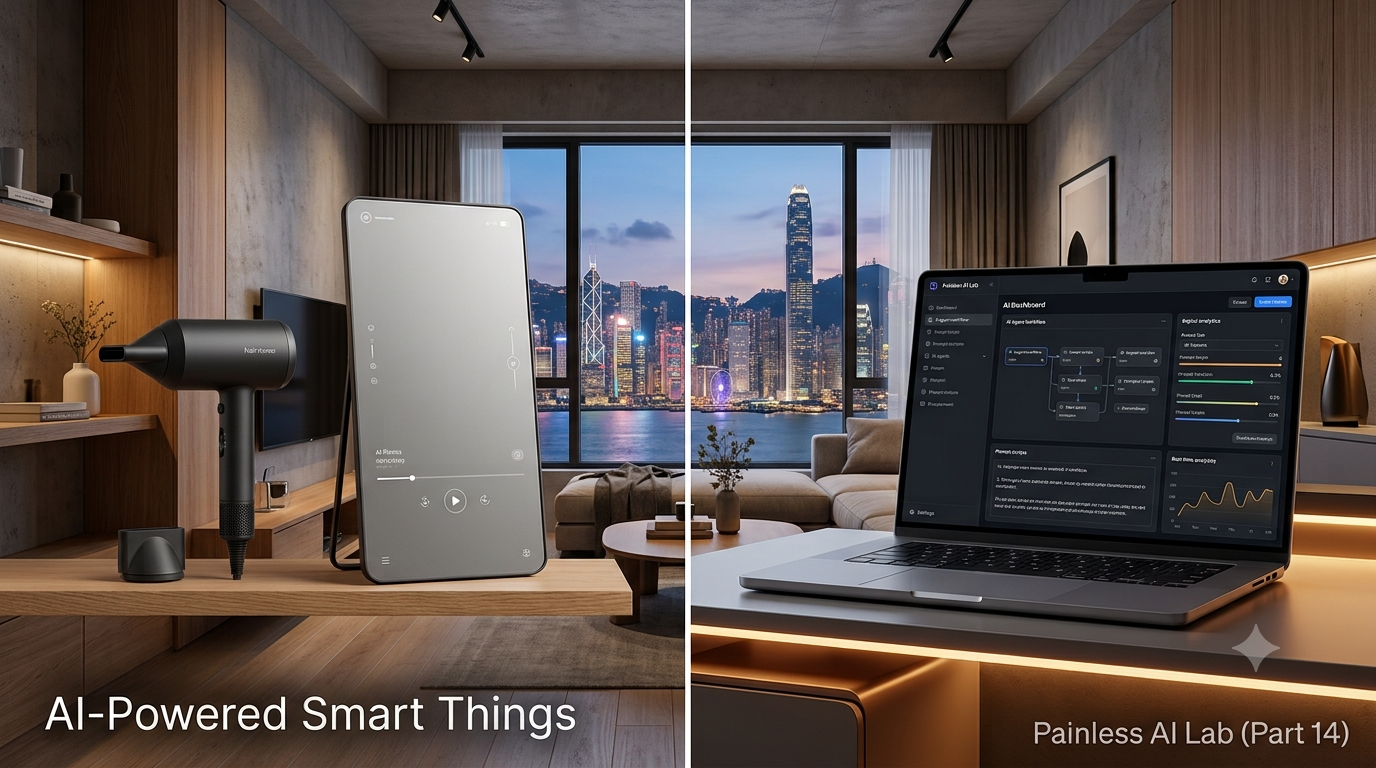
The physical side is evolving quickly with the rise of AI PCs, specialized accessories, and AI Smart Home Devices. You don’t need to invent new hardware. The opportunity is in sourcing, customizing, and branding products that support the AI lifestyle — think ergonomic desk setups for people running multiple monitors and local models, cases for portable AI devices, or curated accessories that improve focus and workflow.
Hong Kong’s location is a real advantage here. We’re right next to manufacturing hubs in Asia, so testing small batches or finding reliable suppliers is much more doable than for someone in Europe or the US.
Upsides: Many people like the satisfaction of selling something real.
Downsides: You have to deal with inventory, shipping, returns, and quality control. Cash flow can be tighter, and big brands already dominate some categories. Starting small and validating demand first is essential.
My Strategy: Why Choose One When You Can Test Both?
A lot of people get stuck analyzing which path is “better” and end up doing nothing for months.
My approach is simpler: run small experiments in both directions at the same time.
That doesn’t mean going all-in on everything. It means picking tiny, low-risk tests.
On the digital side, maybe launch a simple prompt pack or workflow template and see if people buy.
On the physical side, start with affiliate links to AI accessories you actually use or order a very small batch of something to test on local platforms.
“If you try, you might win or you might lose. But if you don’t try, you’ve already lost.”
This mindset is exactly why I started Painless AI Lab. I’m not trying to build a giant company on day one. By writing these posts, sharing my actual struggles, and documenting the workflows and code I use, I’m learning in public and slowly building trust with you.
Once that foundation is there, it becomes natural to introduce small digital products (like prompt libraries or automation templates) and eventually physical ones I genuinely believe in. You don’t need a huge budget. You just need to pick a small lane, test it honestly, and pay attention to what the market actually does.
What Do You Think?
If you were to start an AI-powered side hustle this weekend, which direction feels more natural to you—digital products with their flexibility and high margins, or physical goods with that tangible feel?
Are you in Hong Kong or another high-cost city? How does the local environment shape your thinking?
Drop a comment below and tell me what you’re considering or already building. I read every one and often get great ideas from them.