AI Automation vs AI Prediction: Why My AI Failed to Win the Mark Six Lottery (And What That Teaches Us)
Painless AI Lab – A Hong Kong Practitioner’s Real-World AI Journey (Part 26)
A few weeks ago, I had a moment of pure, hopeful delusion.
I was sitting at home, staring at my PC monitor, looking at the sky. That’s when a silly idea hits me: What if I use AI to crack the Mark Six?
I asked an AI large language model to writeme a Python script, pulled years of historical Mark Six lottery data to predict the next six winning numbers.
I walked down to the nearest Jockey Club outlet, bought the ticket with my freshly generated numbers, and waited for the draw.
The result? Not a single number matched. Zero. Zilch. I didn’t even hit a single lucky digit.
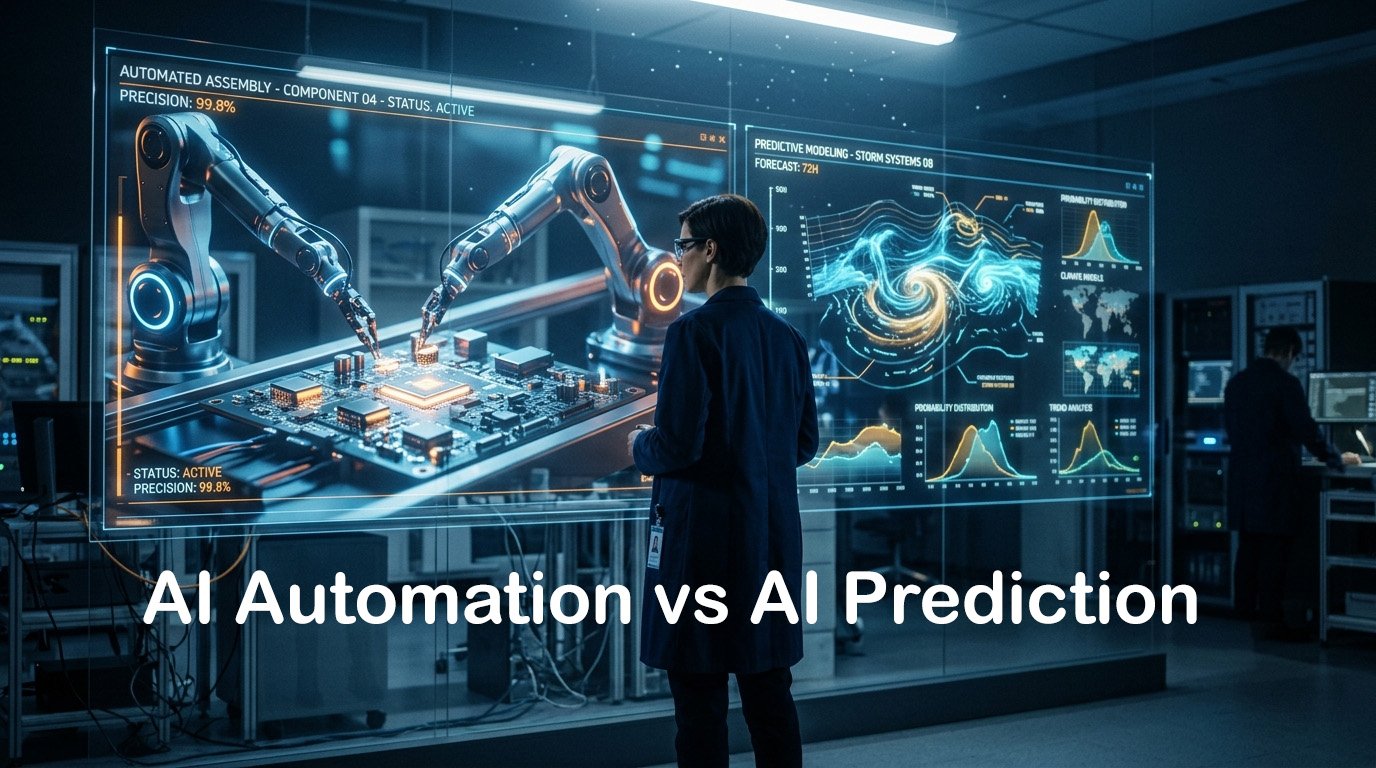
That moment of mild disappointment (and lost pocket change) became a massive lightbulb moment for me. In that hilarious failure, I stumbled onto something fundamental that I think a lot of us mess up when we start diving into tech: most people don’t actually understand the difference between AI Automation and AI Prediction.
We group them together under the generic “AI” umbrella, but they are entirely different tools. Confusing them will cost you time, money, and a lot of unnecessary frustration, especially if you’re trying to build a side hustle or manage your own investments like I am.
Let’s Break Down the Definitions (No Jargon, I Promise)
To get our hands dirty with AI without going crazy, we need to treat these two concepts as different teammates in our workflow.
- AI Automation is about Execution
Automation takes over repetitive, rule-based tasks that humans used to do manually. Think of it as a super-disciplined digital assistant that follows your exact instructions 24/7 without getting tired, distracted, or demanding a coffee break.
It runs on a simple logic: If this happens, then do that.
- Open an incoming email: Check for specific keywords. Draft a template reply. Save the record. Move to the next task.
You see this everywhere now. It’s chatbots answering routine customer questions, scripts automatically sorting your monthly receipts, tools scheduling your blog posts, or software formatting raw data into clean spreadsheets. The goal here isn’t to think; it’s to eliminate effort, reduce human error, and buy back your personal time.
- AI Prediction is about Forecasting
Prediction, on the other hand, tries to look into the future. It digests mountains of historical data, searches for faint underlying patterns, and calculates probabilities about what might happen next.
It doesn’t actually “know” the future, it’s just a really fast, highly sophisticated statistician making an educated guess based on what’s already happened.
The takeaway: One is a reliable digital worker. The other is a probability calculator.
The Hard Lottery Lesson
My Mark Six experiment failed so spectacularly because I demanded a prediction tool to solve a problem designed to be impossible.
Lotteries are engineered by math experts to be as close to pure randomness as humanly possible. There are no secret, hidden patterns for an AI to discover, no matter how many gigabytes of historical winning numbers you feed into it.
When the underlying reality is pure chance, even the most advanced AI model in the world can only give you numbers that look plausible, not numbers that will actually win.
This was a huge reality check for my personal journey in investment and app building: AI Prediction works amazingly well when real, structured patterns exist in the data. It completely collapses when randomness takes over.
Where AI Prediction Actually Pays Off
While it won’t give you the winning lottery numbers, predictive AI is doing mind-blowing work in fields where structural data actually exists:
- E-Commerce & Recommendations: Platforms analyze your browsing history and purchase habits to predict what you’ll want to buy next (hello, late-night impulse buys on Amazon).
- Healthcare & Diagnostics: AI models can scan thousands of X-rays or MRI scans to catch subtle early signs of disease faster than human eyes often can.
- Financial Trends & Demand: Retailers predict exact inventory needs for upcoming seasons, helping cut down massive amounts of waste.
- Predictive Maintenance: Airlines and manufacturing plants use sensors paired with AI to predict when a mechanical part is going to fail before it breaks down in mid-air or on the production line.
In every single one of these cases, there is a real pattern hidden under the hood. The AI isn’t magically guessing; it’s just reading subtle signals that humans are too slow to catch.
So… Which One Should You Focus On?
If you’re a solopreneur, a busy professional, or just someone trying to get an edge while living in a fast-paced city like Hong Kong, start with AI Automation.
Automation gives you an immediate return on your time. You can set up workflows today that summarize your long industry newsletters, format your daily notes, clean up your expense logs, or handle routine client communications. It turns 10-hour workweeks into 2-hour tasks.
AI Prediction is fascinating, especially when analyzing stock market metrics or consumer trends, but it’s trickier. It requires clean data, a deep understanding of probabilities, and realistic expectations.
The real sweet spot happens when you marry the two:
- Use Automation to scrape, clean, and organize your daily inputs.
- Use Prediction to highlight trends or surface insights from that organized data.
- Use Automation again to act on those insights (like drafting a report or sending an alert).
Stop Looking for a Fortune Teller
My failed Mark Six ticket was worth every penny because it forced me to adjust my mindset.
I stopped looking at AI as a magic fortune teller that would make me rich overnight with zero effort.
That shift in perspective has done way more for my real-life productivity and portfolio than any lottery ticket ever could.
What about you?
Have you ever tried using AI for something ridiculous or ambitious, only to watch it fail miserably?
Or are you currently using AI automation to save time in your daily routine?
Let me know in the comments below:
I’d love to hear your stories!