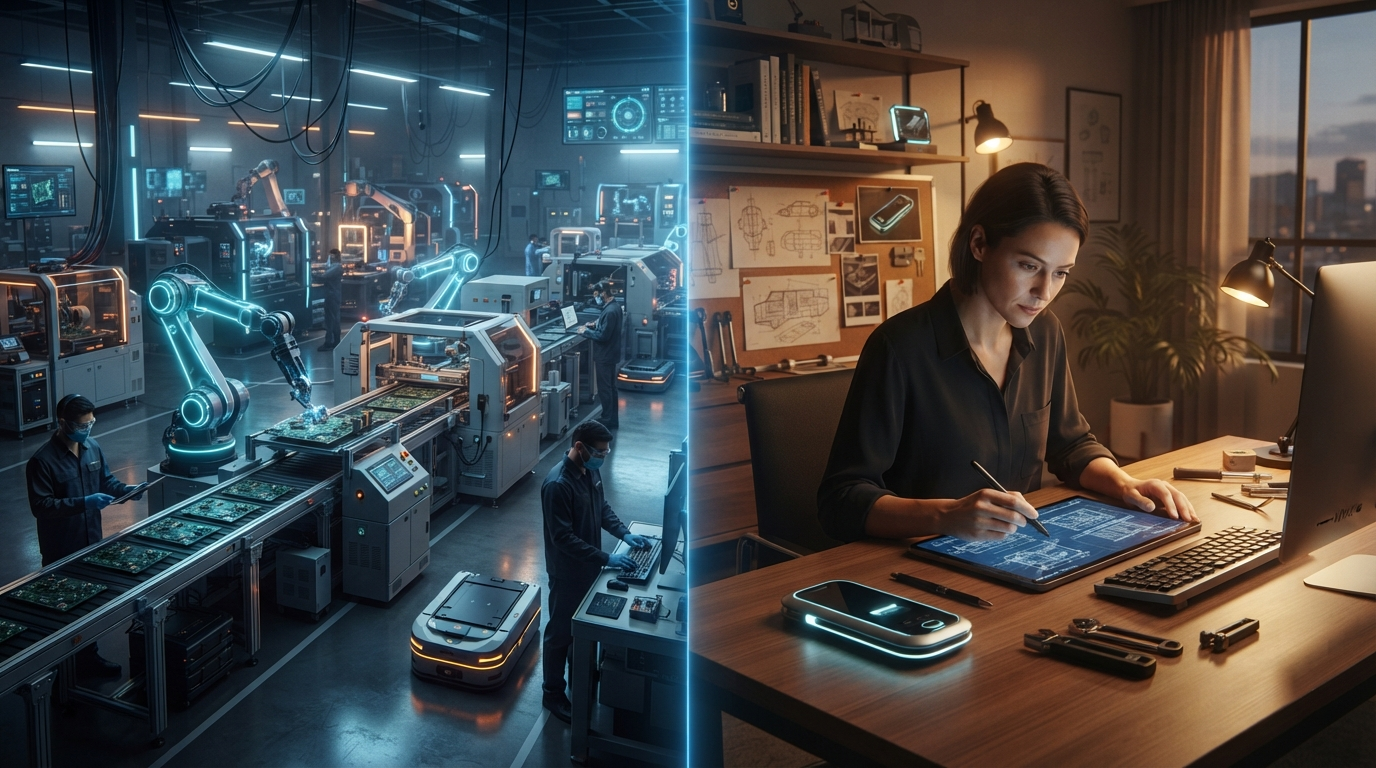
From Factory Floors to Your Brand: Should You Go OEM or ODM?
Painless AI Lab : A Hong Kong Practitioner’s Real-World AI Journey (Part 30)
Painless AI Lab : A Hong Kong Practitioner’s Real-World AI Journey (Part 30)
Are you still selling generic, off-the-shelf products online with no real branding?
If so, you are probably stuck in a price war. Price transparency on the internet ended the easy-profit days a long time ago.
That is why more solopreneurs, small business owners, and even larger companies are looking at OEM and ODM as a way to build their own brand.
I’ve spent around 20 years working with PC hardware and Tech Gadgets in both local and overseas markets. I’ve seen companies collapse, get sold, and later watched the AI hardware boom transform the industry. Along the way, I’ve also seen many OEM and ODM projects succeed and many fail. If you’re thinking about taking a product idea to a factory, here’s a practical breakdown based on real experience.
What’s the Difference Between ODM and OEM?
Before spending money, you need to understand which path fits your budget, timeline, and risk tolerance.
ODM (Original Design Manufacturer)
The factory already has a ready-made design. You put your brand on it and sell it as your own.
- Advantages: Faster, lower cost, less complicated
- Disadvantages: You may end up competing with other brands selling almost the same product
Real example:
When I worked with graphic cards, some overseas customers did not want to sell under the original brand. We simply silk-printed their logo on the PCB, packed the cards into their custom boxes, and handled software licensing when needed. The customer mainly provided artwork, placed the minimum order, and waited for golden sample approval.
OEM (Original Equipment Manufacturer)
The factory builds the product based on your own design and specifications.
- Advantages: Unique product, stronger brand identity
- Disadvantages: Higher cost, longer timeline, more risk, and constant problem-solving
A Real OEM Case: Smart Home Security System
One more complex project I worked on was a Smart Home Security System. It included a Wi-Fi camera with alarm functions and various sensors (door/window, SOS, siren, water leakage, etc.), controlled through Android and iOS apps. Because this involved hardware, firmware, and app development, the difficulty increased significantly.
Key issues included:
- Safety certifications
- Listing APP on Apple App Store requirements
- Cloud server setup
- Stable components supply (shortages are a common cause of delay)
- Possible patent or licensing issues
- Localization
Basic Steps in an OEM Project
- Define clear product specifications and appearance
- Find & Evaluate factories (online research + trade exhibitions + factory visits)
- Visit at least three factories and compare their production capability
- Sign an NDA before sharing detailed designs
- Negotiate price, lead time, and intellectual property terms
- Develop prototypes and approve a golden sample
- Run pilot production before mass production
In reality, unexpected problems appear almost every day. Never take a simple “yes” from a factory at face value. Some overseas companies even send engineers to stay near the factory for months to manage the process closely.
Hard Questions Before You Start
Before committing to OEM or ODM, ask yourself:
- Is there real market demand, or is this just an idea you like?
- Can your product solve the customer pain point?
- The customer will pay for your product?
- How large is the market, and is it growing?
- Can you afford the time and cash required if the project takes longer than expected?
- If the project fails, how serious is the impact on your business?
Hardware and app development are both demanding, especially when operating from a high-cost city like Hong Kong.
But working directly with manufacturing teaches lessons that no textbook can provide.
What About You?
Have you considered launching your own physical product?
Are you currently deciding between a ready-made ODM option and a fully custom OEM project?
Share your thoughts in the comments. I’m happy to discuss.